The problem
Economic reporting draws on many systems with different structures and definitions. Decision-makers need a coherent view with clear relationships between indicators.
Data & analytics
Connecting economic and financial data to a shared analytical foundation.
↳ Created with my teamUzData / Ministry DWH addresses the need to bring institutional data together for analysis and reporting. It is intended for analysts and decision-makers working with information from multiple systems. Our team’s documented work includes data integration, warehouse infrastructure, analytical views, and AI-supported reporting workstreams. Reliable integration and a consistent analytical foundation connect the data platform to its reporting capabilities. The case study explains these components and the relationship between them. It does not claim that every listed workstream is complete or publish independently verified improvements in reporting speed or data quality.
The projects in this portfolio are a shared effort. Product decisions, architecture, engineering, and delivery belong to the people who build together. My responsibilities vary from project to project.
Economic reporting draws on many systems with different structures and definitions. Decision-makers need a coherent view with clear relationships between indicators.
Ministry leadership, analysts, and data administrators.
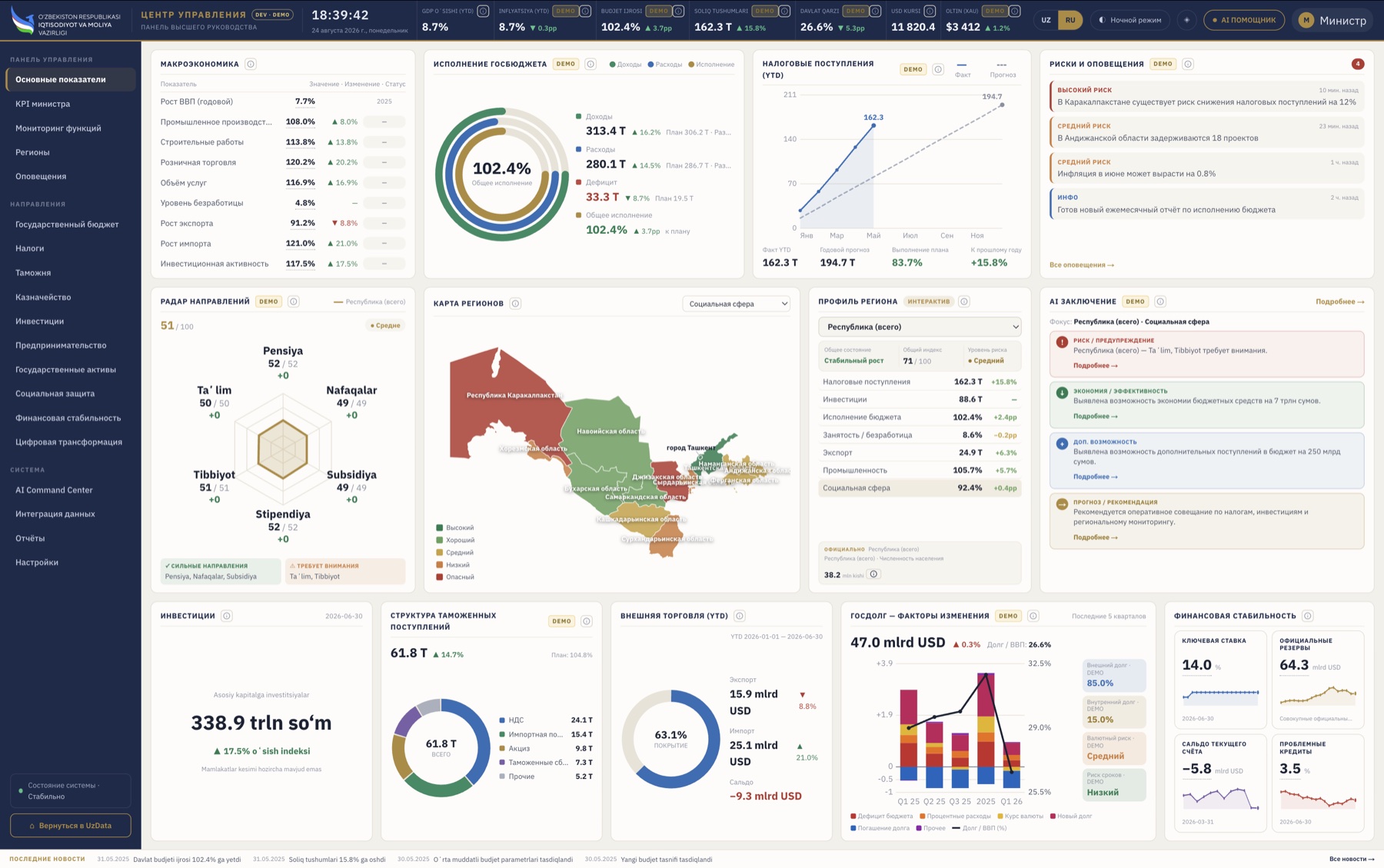
Our team develops data ingestion and warehouse foundations alongside role-specific dashboards covering areas such as public debt, budget, taxation, and financial stability.
ETL/ELT pipelines, consistent data contracts, and metadata governance underpin the warehouse. Analytical APIs connect the data layer to dashboards and other AI services.
Multi-source integration, role-based dashboards, indicator visualization, data mapping, and analytical API work.
The displayed dashboard is a demonstration. Its figures are illustrative and are not official economic statistics or evidence of project impact.
Technical foundation